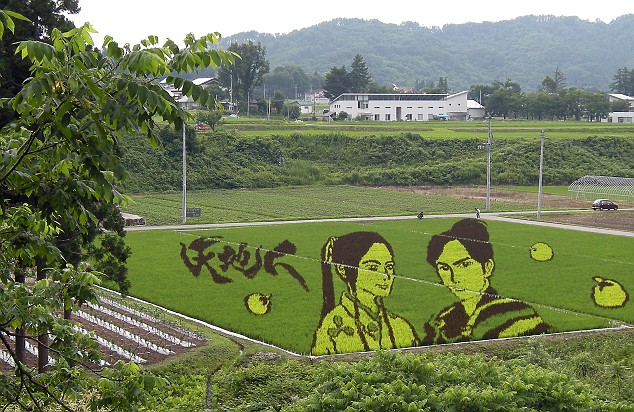
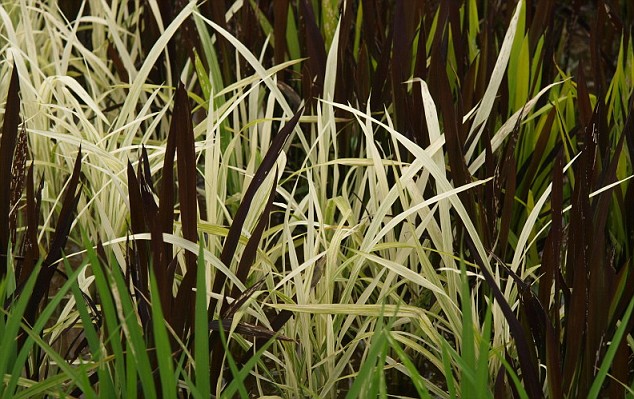
 Last week I told you about the mysterious rice paddy art in Japan, and this week I will reveal the secret! Created in a small northern-Honshu community, the art project was created as a way to attract tourists to the area. The idea came from seeing school children planting different coloured rice plants, and realizing they could be planted in such a way as to create words or a picture. Check out the pictures below to see for yourself how the different types of rice plants are planted to create these unique patterns. To read a story in The New York Times about these beautiful paddies, click HERE.
Of course these forms of giant art are quite beautiful, but could there also be other applications for these farming methods? Ad with crop circles, could we use these methods to create giant signs? Airplane and helicopter navigation signs? Giant advertisements? Creating new varieties of rice, or even naturally mixed bags of rice (if they use different rice plants, when harvested, you would have a nice “mixed bag”). The rice could even be sold with the art design that it was grown in printed on the bag! What other uses can you think of? Could the same method be used to create pictures or design in the Hokkaido lavender fields or with other plants?
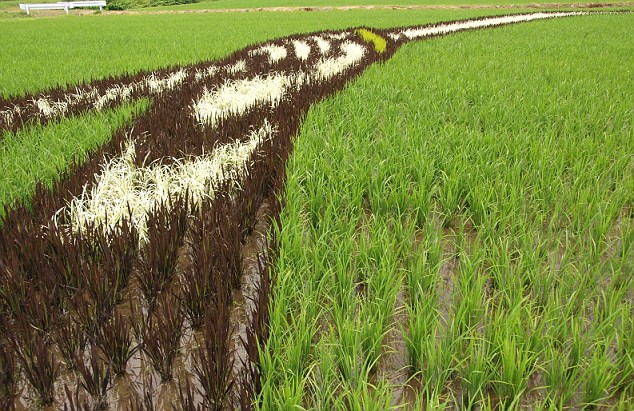
As you can see, the different types of rice, in brown, white, yellow and green, are planted so as to grow and create the pattern.


Leave a Reply